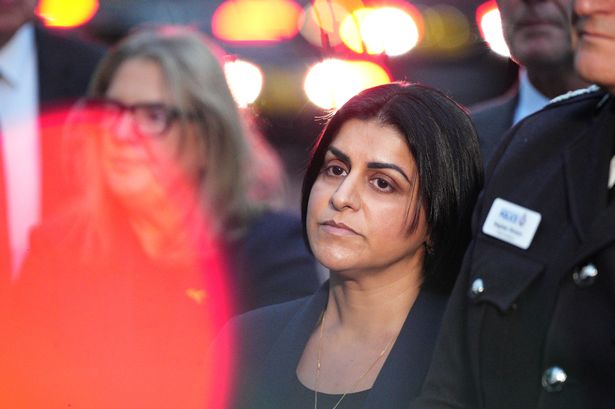
Shabana Mahmood has set out a string of controversial reforms to the UK’s asylum system after claiming illegal migration is “tearing our country apart”.
Under new measures – which have already provoked a furious backlash – people granted asylum will have to wait 20 years to apply to settle permanently. And those granted the protection will have their status reviewed every two-and-a-half years, meaning they could be returned to their homeland.
Ms Mahmood has also proposed ripping up the legal duty to support asylum seekers, and giving authorities the right to seize valuables from small boat arrivals. The measures have been condemned by Labour backbenchers, human rights groups and opposition groups.
But Nigel Farage’s No2, Richard Tice, quipped that Ms Mahmood is “beginning to sound as though she’s sort of bringing an application to join Reform”. Labour MP Sarah Owen branded proposals “repugnant” and questioned whether they would stop Channel crossings.
In a policy document published on Monday, Ms Mahmood said her predessors had not been tough enough. She wrote: “We have shown ourselves unwilling to show the necessary toughness or resolve to assert our right to return those with no right to be here.”
(
PA Wire)
As a result of the proposed changes, Ms Mahmood wrote, asylum seekers and refugees “will not be offered the generous terms they currently receive”.
1. Seizing assets from asylum seekers
One of the most controversial measures is a proposal to seize valuables – reportedly including necklaces and chains – from people claiming asylum.
Ms Mahmood wants to use the assets, which would also include high-value items acquired in the UK like cars and e-bikes, to pay for accommodation costs. This would not include taking family heirlooms and wedding rings, the Government said.
The move is modelled on Denmark’s “jewellery law” – which allows officials to confiscate refugees’ valuables. It says people will be required to “contribute towards the cost of their asylum support where they have some assets or income, but not enough to support themselves independently”.
And the document continues: “We will also take action to recover support costs in scenarios where any assets are not convertible into cash or declared at the point that asylum support is initially provided but become convertible or are discovered at a later date.”
2. End of legal duty to support asylum seekers
The Home Secretary has announced the Government is scrapping the legal duty to provide asylum-seeker support.
Officials dubbed these “automatic handouts” – meaning housing and weekly allowances will no longer be guaranteed for asylum seekers. The legal requirement has been in place since 2005.
The government said this assistance will become “discretionary” – meaning it can refuse to help those who can work or have assets.
The Government has claimed the UK is a “magnet for illegal migrants seeking to benefit from a generous system”. Refugees will continue to have access to public funds, but the Government will consult on measures that could mean migrants have to meet additional requirements to receive and retain benefits.
3. Support ending for those eligible to work
People who have a right to work in the UK and can support themselves, but do not, face being denied housing and benefits under the new measures.
The Home Office said: “The government will seek to remove asylum support, including accommodation and handouts, to those that have a right to work and who can support themselves but choose not to or those who break UK law.”

(
AFP via Getty Images)
4. Sending families back to their homelands
The new policy says that whole families including children will be offered financial support to return to their homelands.
It said there has been a “hesitancy” around sending families back – meaning many receive free accommodation and support “for years on end”.
The document states: “The government will offer all families financial support to enable them to return to their home country. Should they refuse that support, we will escalate to an enforced return. We will launch a consultation on the process for enforcing the removal of families, including children.”
5. Refugee status made temporary
Ms Mahmood confirmed that refugee status will become temporary – and subject to regular review. This means that refugees will be removed as soon as their home countries are deemed safe.
The wait for permanent settlement will be quadrupled to 20 years from its current five. The document says: “In the future there will be no path to indefinite settled status in the UK on core protection, until a refugee has spent 20 years in the country, an increase on the current five years.
“Settlement requirements will be considered in an upcoming consultation on earned settlement, covering both legal and illegal migrants.”
6. Criminals and those who refuse to move to be penalised
Support will only be offered to those who comply with UK law, the document states.
The same will be true for those who refuse to move location or whose behaviour is deemed disruptive. It states: “Today, criminality does not exclude an asylum seeker from receiving state support.
“This is unacceptable, and we will sanction those who take advantage of our generosity. This will extend beyond those who break the law and include those who refuse to relocate to a different accommodation site and those who are disruptive in accommodation setting.”
7. New safe and legal routes to be introduced
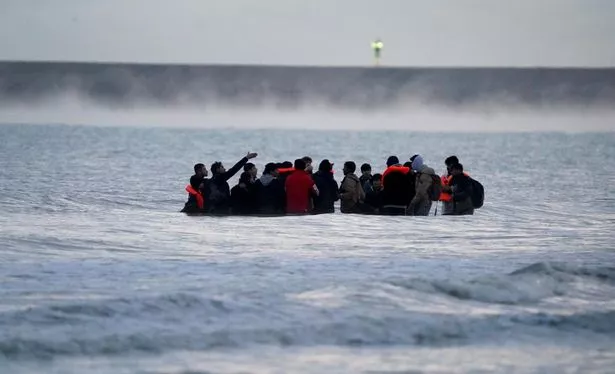
New safe and legal routes to the UK will be brought in as a way to cut dangerous journeys in small boats across the English Channel.
Under the plans, local communities will be able to sponsor individual refugees in a model similar to the Homes for Ukraine scheme, in which people hosted those in need in their homes.
8. AI age testing
AI will be used to determine whether asylum seekers claiming to be children are telling the truth.
Facial Age Estimation technology – which has been trained on thousands of images – is set to be deployed by the Home Office. The software will produce results in seconds and detect whether a person is faking their age, officials say.
This will also ensure that children are not wrongly treated as adults, officials said.
9. Appeals system shake-up
The Government will set up a new independent body – similar to a model in Denmark – which will fast-track deportations.
This will focus on removing dangerous criminals and those who have “little prospect of success”, the Home Office has said. People will have a single appeal, with the document saying: “Where a person loses their appeal, they will be expected to leave the country. Where they do not, we will enforce their return.”
10. Overhaul of human rights laws
The Government will overhaul human rights rules to prevent it from being used to frustrate deportations. The new legislation will be brought forward to ensure article 8 of the European Convention on Human Rights (the right to family life) is balanced against the public interest.
Failed asylum seekers will also be limited to make one appeal against their removal, instead of having the ability to make multiple challenges on different grounds. Last-minute appeals will be expedited, and the deportation of serious criminals will be fast-tracked with a new independent body.
11. Visa bans for countries that refuse removals
The Home Secretary has announced visa bans will be imposed on countries who do not accept the return of criminals and failed asylum seekers.
Ms Mahmood said the UK will stop granting visas to nationals of Angola, Namibia and the Democratic Republic of Congo if their governments do not rapidly improve co-operation on removals.
The Home Office said it was in response to an “unacceptably low co-operation and obstructive returns processes”.
12. Digital ID by 2029
The new policy document states that digital ID will be rolled out by 2029.
It says: “By the end of this Parliament, a digital ID will be mandatory to prove the right to work in the UK. Alongside transforming public services, this will reduce the ability of illegal workers to use fraudulent documents to gain employment and prevent rogue employers from turning a blind eye to questionable documentation.
13. Enforced returns to nations like Syria
The Government has ruled that if a country’s regime changes, people who came from that nation may be ordered to return.
It gives the example of Syria following the fall of the brutal Assad regime. The document says: We are now exploring resuming enforced returns to countries where we have not routinely carried out such removals in recent years, including to Syria.
14. Use of large-scale sites for asylum accommodation
The document re-emphasises the Government’s pledge to shut asylum hotels.
Instead it points to other nations’ efforts to house people on large sites – including former schools and airports. The policy says: “Several European countries, including Germany, Denmark, Belgium, and Netherlands operate large scale sites for asylum accommodation. These include both purpose-built facilities and repurposed spaces such as schools, community centres, conference venues, hospitals, prisons, care homes, disused industrial sites, and former airports.”