Rome, 24 August, AD410. The empire that’s dominated Europe for five centuries is on the brink of collapse, its capital at the mercy of a barbarian leader. What do the people do? They do as they’ve always done. The rich scramble to hide their wealth. The poor run for their lives. The fateful decisions of a tiny number of power-obsessed men bring the mightiest civilisation on Earth to its knees. Sounds familiar? And yet. No one saw it coming … OK, apart from us, the hollow-eyed cynics of the future, watching the BBC’s latest iteration of a landmark series from the discomfort of our own civilisation’s real-time plummet.
The first, less-close-to-the-bone Civilisation aired in AD1969. An equally un-self-aware era when it was totally fine for a Tory politician in trilby and tie (Kenneth Clark) to chart western culture’s triumph over the barbarians. (Some may say: plus ça change.) Next, in 2018, came its well-intentioned successor fronted by Simon Schama, Mary Beard and David Olusoga. Which, like a weak emperor, was trying to be everything to everyone and thus, not unlike ancient Rome’s Honorius, suffered mixed reviews and plunging ratings. Now the sumptuous threequel strides into the arena, all fire, war, disease, disaster and slick Netflix-era dramatic re-enactments. It also comes, somewhat aptly, at a time of deep existential crisis within the BBC itself. Which in less ancient times was the instrument of another empire that fell …
In Civilisations: Rise and Fall, beautifully narrated by Sophie Okonedo, the emphasis is not on the rise but the fall of four ancient worlds: Rome, Egypt, the Aztecs and the samurai of Japan. One by one, they go down due to a set of circumstances with which we present-day civilians are grimly familiar. Climate catastrophe, war, pandemic, mass migration, the insatiable greed generated by colonisation, gross inequality … Need I go on? Valerie Amos, one of the series’ commentators, says it best: “The seeds of a society’s destruction are sown within it.” Modern civilisation, take note.

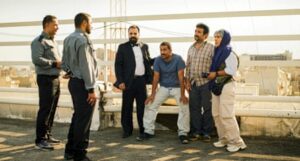
Each monumental nosedive is brought to life by an on-trend compendium of diverse experts – Antony Gormley on a 550-year-old Aztec turquoise skull! Alastair Campbell on the toxic dynasty of the Ptolemies! Alongside this are re-enactments featuring bejewelled and berobed actors staring portentously into the middle distance to make up for the lack of dialogue that mostly had my blood thirsting for a rewatch of Game of Thrones, Shōgun, even Gladiator.
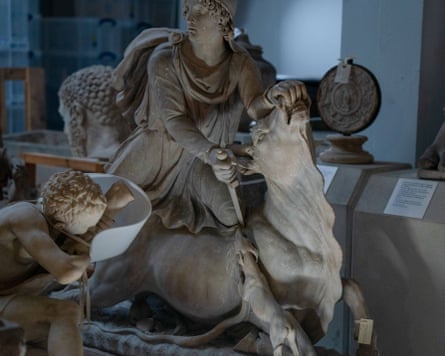
Standing for all the brutal history is a choice selection of cultural artefacts held in the British Museum. How exactly we came to possess such ancient treasures as a 2,050-year-old head of Augustus, or the Rosetta Stone – whose Egyptian hieroglyphs are interpreted here to illuminate one of Cleopatra’s most important decisions – or one of the most lethal samurai swords ever created, is not part of the story. Which is a shame because actually it very much is. Who knows, perhaps reparation will be the subject of Civilisations: 4? In the meantime, I recommend watching Empire with David Olusoga as an excellent, if unintended, companion piece.
The objects really are extraordinary. Such as the ornate silver Projecta casket (AD350-400), used in the first episode to tell the age-old story of how the vast wealth held by the super-rich 1% of Roman elites led to less going into the imperial coffers, and ultimately to the empire’s downfall. “Wealth inequality is the most common and crucial element in societal collapse,” says Luke Kemp of the Orwellian-sounding Centre for the Study of Existential Risk and one of Civilisations’ most astute commentators. “It corrodes the social fabric … hollows out societies, leaving them to be a brittle shell which can be cracked asunder by numerous different shocks.”

Civilisations: Rise and Fall reminds us, over and over, that the past is the place to go for the solutions to what’s going so catastrophically wrong in our present. Nice idea, if only those in power were capable of learning the lessons of history. At the same time, the artefacts reveal that nothing changes. Humans are as awful as they ever were. Consider a 1,875-year-old terracotta theatre mask expressing deep-seated Roman prejudices towards northern peoples, which leads a commentator to explain the racist root of the word “barbarian”. It comes from the ancient Greek bárbaros and was used to describe the “bar-bar” of foreign languages that the Greeks, then the Romans, couldn’t understand or accept.
It’s gripping, if despairing stuff. And mightily stressful to watch, using running countdowns – 15 years until the fall … eight years … two years … The Fall! – to demonstrate history’s terrifying and inexorable march. Gone are the days of Mary Beard trotting round Rome in her high tops, rhapsodising over some crumbling epitaph. Documentaries about ancient history have become more immediate and frightening – necessarily so. As Kemp puts it: “Every civilisation throughout history has had an expiry date.” Considering we can’t know ours, the apocalyptic nature of much of our viewing schedules these days is … interesting. We seem to want to spend our ever-narrowing downtime in a state of extreme anxiety. I guess it must be the stage we’re at in our own demise.