- Is YOUR area affected by solar farms? Email adam.pogrund@dailymail.co.uk
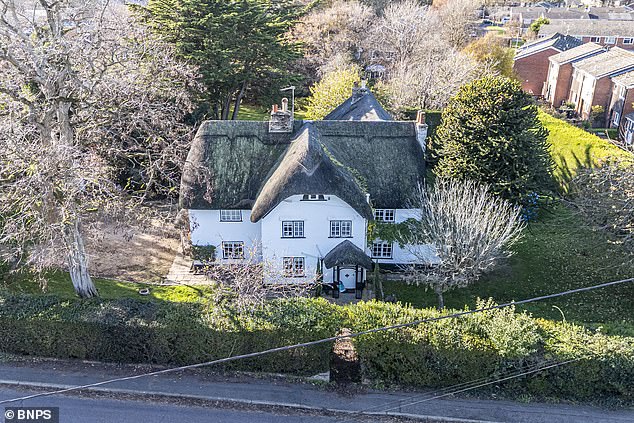
It’s the enchanting thatched cottage that inspired Goldilocks and the Three Bears.
But now the picturesque fields surrounding the 18th-century house are set to be carpeted with 100,000 solar panels.
Burton Cottage, on the edge of the Black Forest, was once the home of poet Robert Southey, and he is thought to have written the earliest version of the fairytale, published in 1837, while living there.
Now residents of Burton village say ‘horrendous’ plans to install a large solar farm near the cottage will reduce the picture-postcard views from the Grade II-listed property to an industrial eyesore.
Burton resident Martin Bird said: ‘There is already a large solar farm in Burton, now we have another scheme for yet more solar panels.
‘The whole area is moving away from agricultural use and farm production. The Government seems hell-bent on going down the route of surrendering agricultural land to alternative energy production.’
Another villager, Tom Borrows, said: ‘Almost all of the residents of Burton village enjoy these countryside spaces, and installation of yet more solar panels is unacceptable. This is valuable land for many species of animals, insects and birds, and the installation of this horrendous solar ‘farm’ will decimate their habitats.’
Conservation bodies are also concerned about the impact the installation will have on the nearby manor house, Burton Hall.
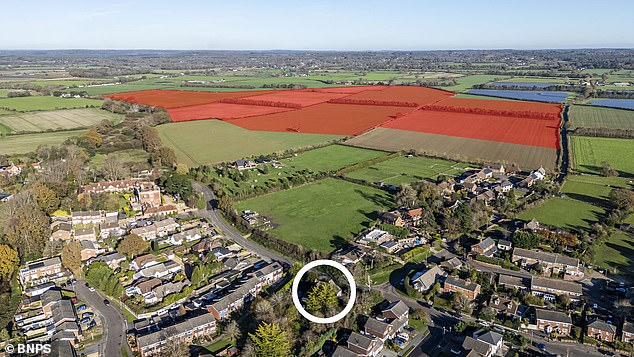
Peter Walters, heritage officer at Bournemouth, Christchurch and Poole Council, said the ‘scheme would change the character of the open farmland that Grade II-listed Burton Hall looks out on to.’
He believes this would have a negative impact on the manor’s significance.
The public body Historic England also has ‘concerns regarding the impact of the proposed solar farm upon the setting of Burton Hall and the Burton Conservation Area’.
Other objectors have questioned the wisdom of losing a productive, arable farm that provides food security for the nation to the ‘urban sprawl’ of renewable energy.
Gerald Rigler, of the Dorset CPRE, also known as The Countryside Charity, said it was ‘essential that our high-quality agricultural land remains available for food production’.
He said the installation of the solar-panel farm would also have a significant impact on the ‘rich landscape whose country lanes are traversed by cyclists, horse riders, walkers and tourists’. The planning application has been submitted by the landowner, the Meyrick Estate.
Planning agent Nicholas Leaney said there was an ‘urgent need’ for the solar farm which was in tune with national policy.
He said the installation would produce up to 53 gigawatt hours (GWh) of energy per year, enough to power 15,796 homes in the local area. Mr Leaney claimed the planned solar farm would have ‘no significant adverse impact on the local landscape or the historic environment’.
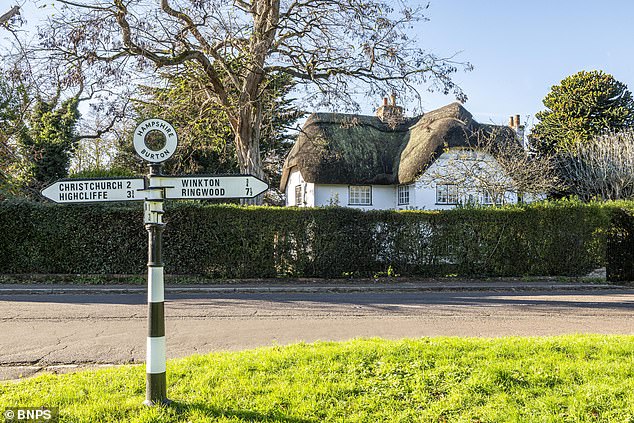
He added that protected properties such as Burton Cottage and Burton Hall were already ‘suitably screened and distant from the site’.
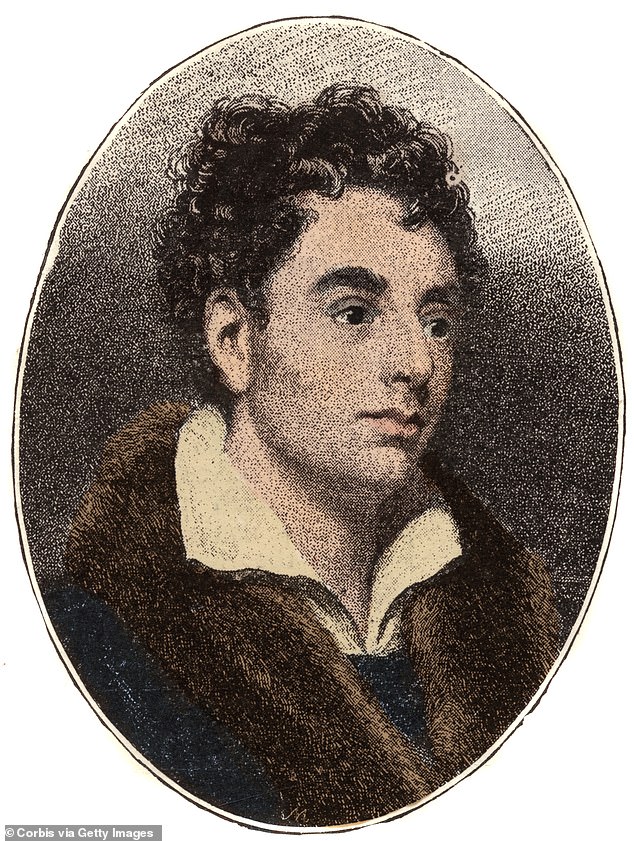
Bristol-born English Romantic poet Southey, who was appointed Poet Laureate in 1813, lived in Burton Cottage between 1799 and 1805.
Although Goldilocks was not published until the 1830s, Southey penned the first version of the story while living in the quaint property.
The fairytale was originally called The Story of the Three Bears.