Months on, it is still hard to convey the horror of the scene that greeted me in the cottage adjoining my home earlier this autumn.
Every carpet and much of the furniture was smeared with dog faeces; the laminate floors and many skirting boards were ruined, the bathroom a wreck and the kitchen trashed. Bare wires protruded from the ceiling, and the stench of stale smoke and excreta was overpowering.
I was horrified but not surprised. This was merely the latest instalment in a saga that began as a straightforward landlord–tenant arrangement and ended in the High Court after a long, costly legal battle, during which I lost tens of thousands in unpaid rent and utility bills.
It is almost laughable that all this occurred before the implementation of the Renters’ Rights Act, which came into force in October and will soon abolish so-called ‘no fault’ evictions while making it ever harder for property owners to make reasonable choices about who lives in their homes.
And for good measure, Chancellor Rachel Reeves has put the boot into landlords by increasing the tax on our rental income by 2 per cent.
Amid Labour’s open hostility to us, and a generation of tenants who apparently can do no wrong, is it any wonder that many landlords are leaving the sector?
They are being pushed out by the woeful lack of protection against nightmare (and at times criminal) tenants, combined with shrinking margins that make renting barely worth the trouble.
Cue the tiny violins, you might say. And certainly, I accept landlords are hardly society’s most sympathetic figures.

But most of us are not the greedy caricatures of folklore, just ordinary people trying to weather the multiple pressures of soaring energy and maintenance costs, ever tightening regulation, swingeing penalties for even minor infringements and diminishing tax relief.
We also provide much needed housing and contribute billions to the economy. Not for much longer: expect the 150,000 who left the market over the past two years to become a harbinger of a far larger exodus as tax and regulation bite.
Last month, a survey by lettings platform Goodlord revealed that a third of all landlords have either sold up or are actively trying to sell in the past 12 months.
They will leave behind a weakened housing market and shrinking supply of rental homes, driving rents up still further for would-be tenants and those who remain.
Rogue landlords, meanwhile, will continue undeterred, having long learned how to sidestep the law.
My own experience is all the more poignant because for many years letting out a property was a positive. Hailing from an ordinary family, I built a career in broadcasting, eventually becoming the BBC’s first female TV sports presenter in the 1980s.
By 1994, after countless 18-hour days, my husband John and I bought an old Warwickshire farmhouse with a few acres.
When John’s engineering business later folded, he channelled his energy into turning a disused oil store next to our home into a cottage to provide essential rental income.
We had many lovely tenants. And when, in 2020, a 40-something car saleswoman from Coventry called Gemma Walters became our latest resident, nothing suggested she would be any different. Desperate for a rural place with room for a few dogs and horses – or so she said – she promised to look after the property.
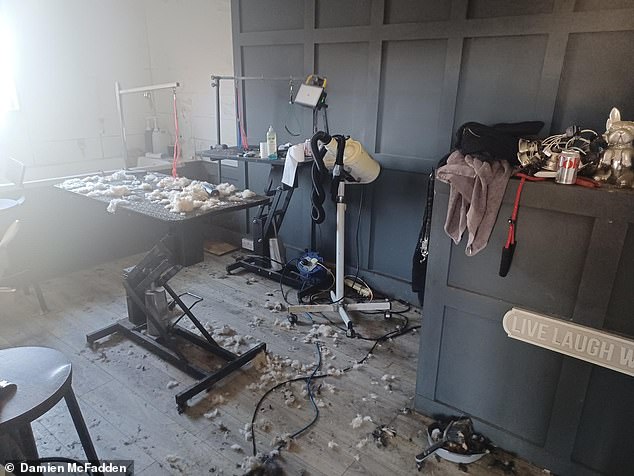
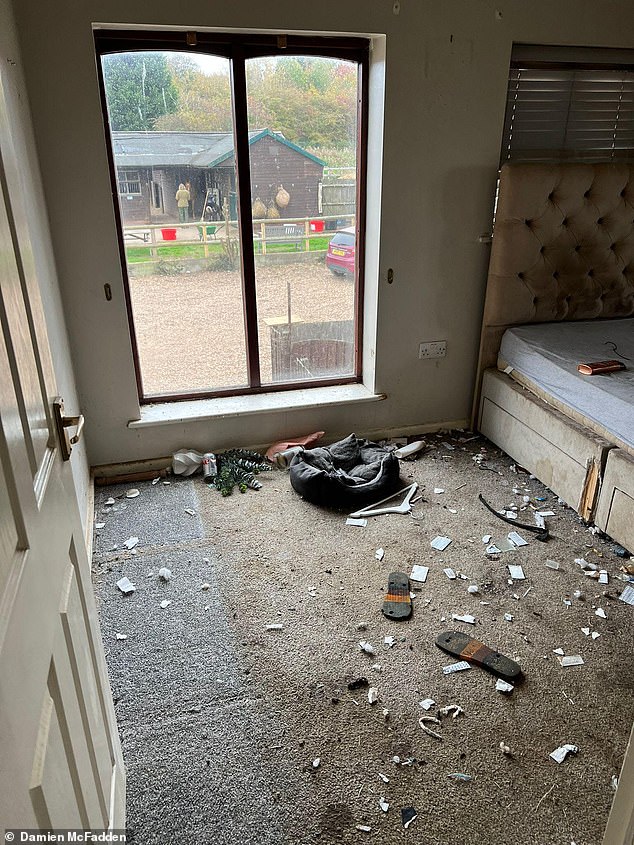

At first, things went smoothly. Although Walters occasionally ‘forgot’ to pay her rent and bills, she always had a plausible hard-luck story and, during the pandemic, I even reduced her rent, knowing her income had fallen.
In time though, those arrears steadily grew, along with her collection of animals: two dogs became six, a dozen and eventually up to 30, living in the cottage and in cramped, squalid cages in the yard.
I seemed to have opened my doors to Cruella de Vil, while the number of horses grazing our land similarly grew.
Most evenings the noise was relentless, which was distressing enough but particularly so for my increasingly frail husband, now in the late stages of dementia.
‘Please make it stop,’ he would plead when greeted by another late night round of howling and barking.
If only I could: attempts to raise the issue with Walters were met with abuse – the same response I received when requesting payment of the spiralling arrears.
By last year the strain left me close to breaking point. John’s health was declining sharply, Walters had virtually stopped paying altogether and it felt as though everything was stacked against us.
The council, the police, even the RSPCA – whom I contacted over concerns for the animals – said there was little they could do.
So in January this year, with Walters’ arrears in the high thousands and her utility bills (which I was covering) costing me an extra £400 a month, I made the difficult decision to pursue legal eviction.
I’d left it long enough, in the vain hope she would move of her own accord and save me the horror of spiralling legal costs.
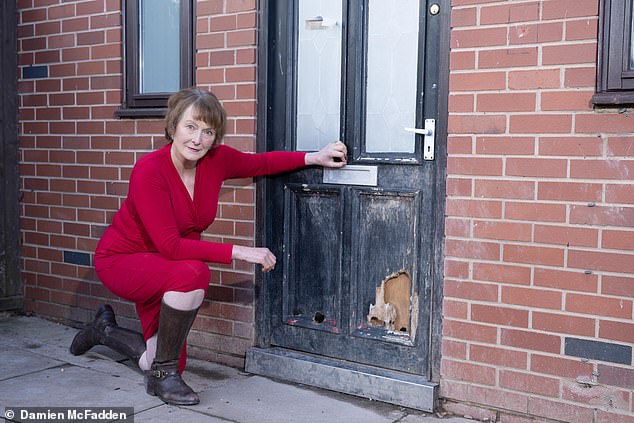
It was hardly a swift remedy. It took until July for the case to reach court – a delay likely to worsen dramatically once the Renters’ Rights Act is fully operational given the tens of thousands of eviction cases currently going through the courts.
Delays such as these leave landlords in hock to the tune of thousands while they wait for the painfully slow wheels of the justice system to turn.
At least my case ‘only’ took six months to get to court during which the presiding judge, visibly unimpressed, gave Walters a week to leave and ordered her to pay more than £17,000 in arrears and legal costs.
A victory, at least on paper. My solicitor warned – correctly – that Walters would ignore the ruling and pay nothing.
And so, with John deteriorating further and the prospect of the new Act offering even greater protection for the worst tenants, I pursued the matter in the High Court.
It was a deeply stressful time. My legal costs escalated – as did Walters’ anti-social behaviour. She lit an illegal bonfire beside our stable yard and, one afternoon, I found her and a powerful accomplice forcing their way into our home without permission to remove two sofas.
They were Walters’ sofas but kept in storage in my garage. When I tried to stop them, they wrestled with me, almost breaking my arm.
Eventually, I received an October date for High Court Enforcement Officers to carry out the eviction, though in the end Walters (and her parents and boyfriend who had also moved in by then) vanished a few days beforehand, leaving more than three tons of rubbish piled in the yard and stables, and that devastated ruin of a cottage.
The mess was so extensive it will take at least five months to make the property even remotely habitable: it needs to be gutted and comprehensively refitted. The cost of this, plus the money lost in rent and legal fees, will be more than £50,000 – and as Walters will plead poverty when challenged, or squirrel away her assets, I won’t see a penny of it.
As a conscientious landlord who went out of my way to help a tenant, I feel not just let down but actively betrayed by the state and the so-called justice system.
The experience has been so appalling that I have vowed never to repeat it, even though the income would be useful.
Like many landlords I know, I have given up. From now on, no more tenants – however glowing their references. Instead, the cottage will serve as a peaceful retreat for friends and family.
All this comes at a cost though. With my husband’s care fees exceeding £40,000 a year, I will have to keep working well into my 70s. It should never have come to this and no one – apart from my shameless former tenant – emerges from it the winner.
Certainly not the honest, hard-working young couples in our area searching for somewhere affordable to rent.
To them, all I can say is: good luck.