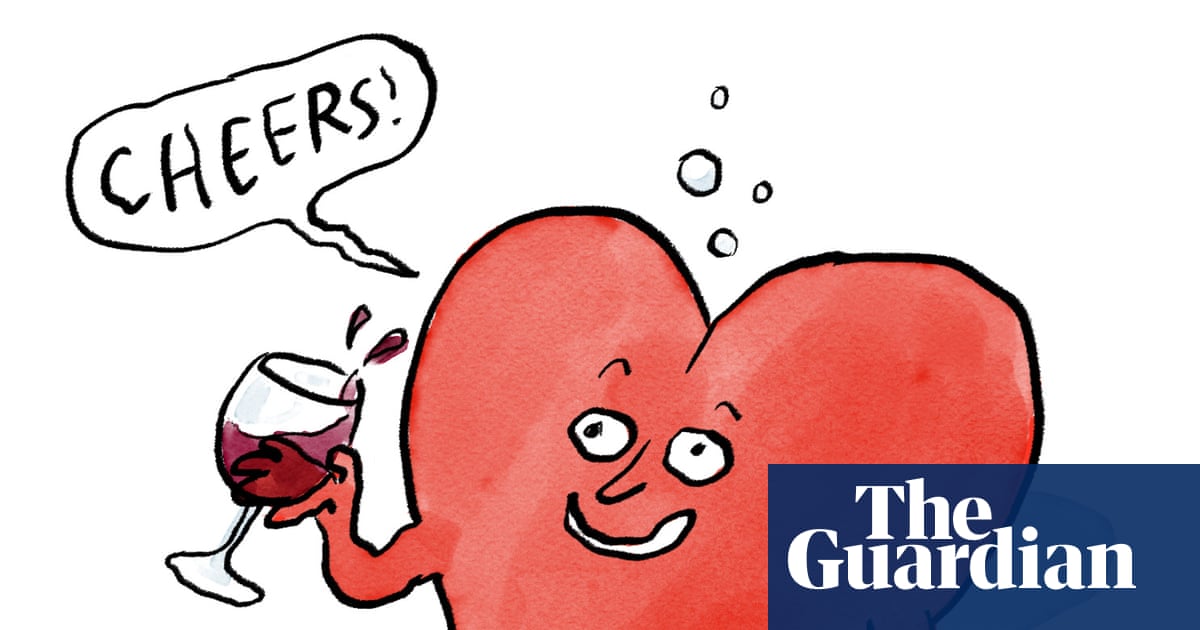
“People shouldn’t think that drinking wine is good for you,” says Dr Oliver Guttmann, a consultant cardiologist at the Wellington hospital in London.
Alcohol consumption is linked to high blood pressure, liver disease, digestive, mental health and immune system problems, as well as cancer.
That said, studies have shown that moderate wine consumption could have some small benefits for your heart, says Guttmann.
They show that wine can help reduce “bad” cholesterol – which may lower the risk of heart disease, kidney problems and stroke. That’s thanks to compounds that have vasorelaxant and anti-inflammatory effects, helping blood vessels stay open and flexible. Red wine also contains antioxidants such as resveratrol, found in the skin of grapes, which may further support heart health.
Still, there are major caveats. The World Health Organisation published a statement in 2023 reporting that no level of alcohol consumption is safe; the benefits of wine for the heart are outweighed by it being a group 1 carcinogen, alongside asbestos and tobacco. Other foods – such as berries and grapes – offer similar benefits to wine without those negative effects.
after newsletter promotion
“I’d never encourage a non-drinker to start,” says Guttmann. But he also says it’s unrealistic to expect everyone who currently drinks to go teetotal, adding: “Moderation is key. Keep it sensible. Alcohol, especially beer or spirits, is high in sugar and calories and can damage the liver.”
He recommends consuming no more than 20 small glasses of wine a month. The British Heart Foundation recommends not drinking more than 14 units of alcohol each week (six medium glasses of wine).
“Wine isn’t medicine,” says Guttmann. “I don’t want people thinking they can eat badly and balance it out with a glass of wine.”