Giving your dog CBD may be a contentious topic, but a new study claims it can make them less aggressive.
Researchers have discovered the compound – found in marijuana and hemp – appears to have a ‘calming effect’ on man’s best friend.
Dogs given the supplement recorded a ‘decline in the intensity of aggressive behaviours’, the study revealed.
And the findings could indicate its potential use in dog training, scientists said.
CBD (Cannabidiol) is already used by humans for issues such as chronic pain, nausea and inflammation.
It doesn’t contain tetrahydrocannabinol (THC), the psychoactive ingredient found in marijuana that produces a high.
In the US, hemp-derived CBD for pets is legal in all 50 states – although technically vets aren’t legally allowed to recommended or administer it. Meanwhile, in other countries such as the UK, there are no current CBD products that have yet been authorised for use in animals.
Although there’s no evidence CBD is toxic to dogs, there’s a lack of research around its effectiveness, correct dosages, side effects and how it interacts with other medications in pets, according to the Blue Cross.

In the US, CBD has not been considered a controlled substance since 2018 when the Agriculture Improvement Act was passed.
Since then, there has been an ‘increase in access to and interest in cannabidiol (CBD) and hemp products, including use in companion dog supplements’, the team say.
To learn more about its effects, the experts used data from the Dog Aging Project, a long-term longitudinal study of more than 47,000 pet dogs.
Data collected through annual surveys between 2019 and 2023 includes yearly updates on the pets’ diet, lifestyle, health and living conditions.
Owners detailed how often their dogs consumed CBD or hemp products – either daily, infrequently (less than once a day) or never.
Combining the survey data of all dogs in every year, they found that 3,470 out of the 47,355 dogs (7.3 per cent) had been given CBD at any point.
Of these, 2,759 dogs (5.8 per cent) were frequent users.
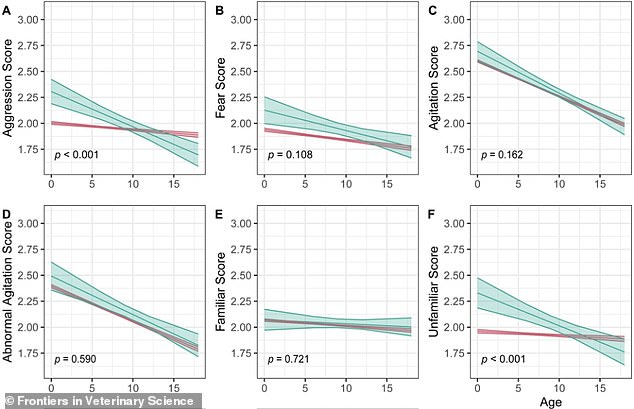
But the findings also suggest that CBD could play a role in reducing aggressive behaviours.

Dogs that received CBD for extended periods were described as having lower-than-average aggression levels compared to dogs with no CBD use.
However, other behavioral traits, such as agitation or anxiety, did not show the same association.
‘Most canine aggression is related to underlying stress or anxiety – a fight or flight response that kicks in,’ said study co-author Professor Julia Albright, veterinarian at the University of Tennessee.
‘It is unclear why only aggression but not other types of anxious or agitated behaviors seemed to be improved with CBD treatment.’
Among the other findings, dogs receiving the supplements were on average three years older than dogs that did not receive CBD.
Several health issues were linked to higher CBD use in dogs including dementia (18.2 per cent), osteoarthritis joint problems (12.5 per cent) and cancer (10 per cent).
Male dogs were given CBD more often, with a nine per cent higher likelihood than female dogs, while activity levels did not differ significantly between dogs that used CBD and those that did not.
The study, published in Frontiers in Veterinary Science, is the most extensive effort yet to investigate CBD use among pet dogs in the US.
According to the team, this study provides an early framework for examining how CBD might help address health and behavior problems in older dogs, as well as in humans with similar concerns.
‘There are many similarities in how CBD can benefit dogs and humans medically,’ said study author Maxwell Leung, assistant professor at Arizona State University.
However, they stress that owners considering CBD for their dogs should purchase reliable products and be cautious with dosing.
CBD can cause side effects such as gastrointestinal upset and diarrhea.
Some studies have shown that CBD may help dogs with arthritis, as they seem to show increased activity and less pain after taking it.
However, according to Canine Arthritis Management, there are ‘too many uncertainties about whether CBD supplements are beneficial for dogs with osteoarthritis, as there is no suitable licensed animal pharmaceutical product on the UK market that has proven efficacy and established safety margins for dosing’.
In the UK, CBD products are not authorized in the UK for veterinary use, according to the government.
‘CBD oil should never be given in the place of licensed veterinary products, and your vet will advise you about the best medications for your pet,’ the Blue Cross said.