A ‘human washing machine’ that can clean a person from head to toe has gone on sale in Japan.
This jet-fighter cockpit-shaped pod uses powerful jets of bubbles to blast the skin clean of dirt and grime.
According to Science Co., the company behind this bizarre contraption, the automatic spa can leave you clean and dry after just 15 minutes.
But that convenience doesn’t come cheap, with a pod costing £290,000 (60 million Japanese yen).
Science Co. says that it will make a limited run of 40 to 50 human washing machines at first.
Thanks to the enormous price tag, most of these will likely end up in high-end spas and hotels in Japan.
However, even if you might not be able to install one in your bathroom right away, there is still hope for the future.
A Science Co. spokesperson said in a statement: ‘In the future, if the technology evolves further and mass production systems are established, there is a possibility that a more affordable home-use model may emerge.’
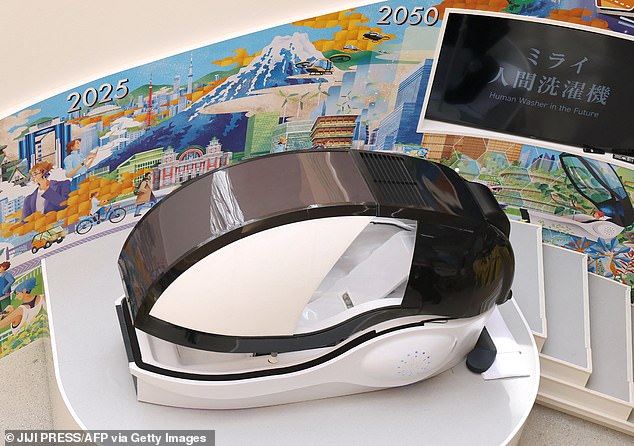
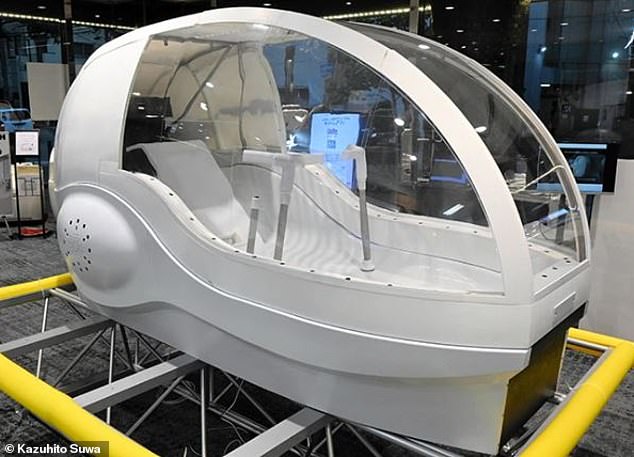
The pod measures 2.5 metres (8.2 feet) long by one metre (3.28 feet) wide, allowing most people to lie down comfortably inside.
Once the hatch has been sealed, the pod fills halfway up with water, leaving the bather partially submerged.
They are then blasted by high-speed water jets containing extremely small air bubbles less than three micrometres in diameter.
When these bubbles burst, they produce a small but powerful pressure wave which dislodges dirt from the skin.
This is the same process used in industry to clean electrical components that can’t be washed with chemicals.
However, rather than just scrubbing the skin, Science Co. says that the human washing machine offers an experience capable of ‘washing the soul’.
The pod monitors the bather’s vital signs, such as their heartbeat, to ensure they are safe and comfortable.
At the same time, an AI interprets this information to work out if they are calm or excited and projects a specifically selected video onto the inside of the plastic pod to soothe their nerves.
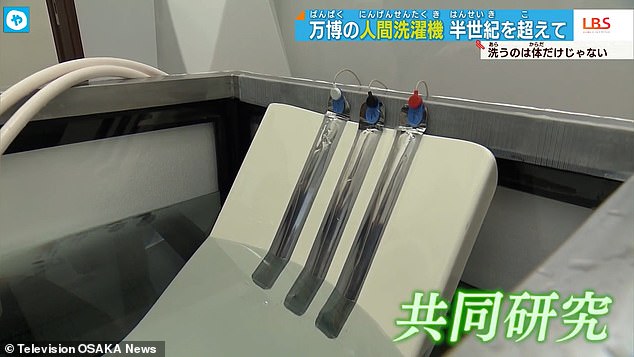
While it might sound futuristic, the design is actually based on a 50-year-old concept.
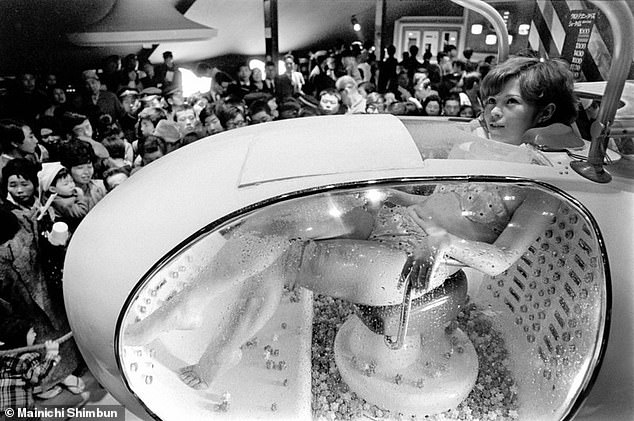
At the 1970 Japan World Exposition, Sanyo Electric Co., now Panasonic Holdings Corp., showcased the very first human washing machine.
The big difference was that this 1970s version also included dozens of plastic ‘massage balls’ which pelted the user to aid in relaxation and promote circulation.
While the device was never commercially released, its public reveal at the World Exposition captured the public’s attention.
At a time in Japan when private baths were still somewhat of a luxury, long queues formed to try out the device.
One of the people in that queue was Yasuaki Aoyama, current chairman of Science Co., who was just nine years old at the time.
Mr Aoyama told The Asahi Shimbun: ‘It made me excited, thinking about what kind of future there would be.’
Now, as the head of a company which specialises in making showerheads, Mr Aoyma is finally in a position to make his childhood dream a reality.
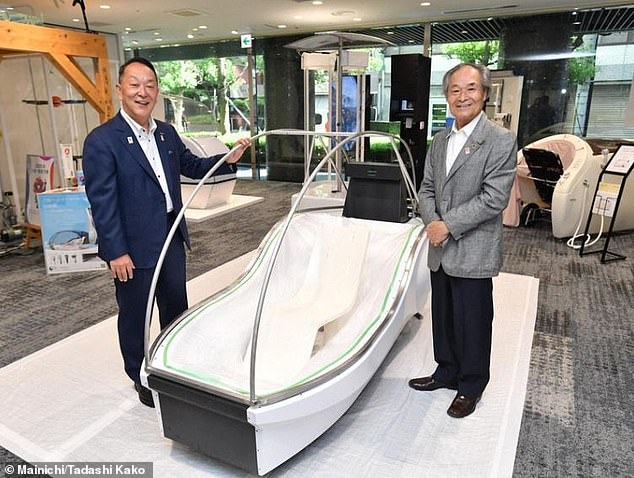
The ‘Mirai Ningen Sentakuki’, or ‘Human Washing Machine of the Future’, was unveiled at the Osaka-Kansai technology exposition last year.
The company had originally intended to make a single prototype to show off their technology, but a surprising surge of interest has now made them reconsider.
At the time, it was reported that 40,000 people applied for a slot to try out the human washing machine.
One hotel in Osaka, Japan, has already agreed to purchase the first human washing machine, with five to eight more units reportedly reserved by potential customers.