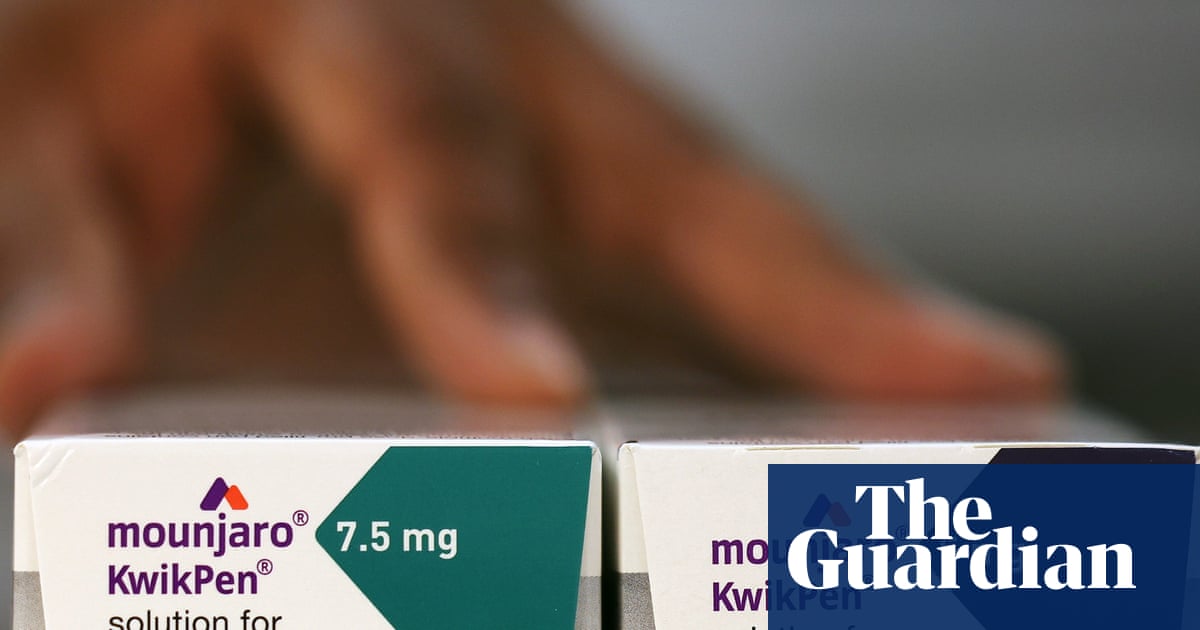
Weight loss drugs such as Mounjaro offer huge potential to tackle soaring obesity globally that will affect 2 billion people worldwide by 2030, the World Health Organization has said.
Their proven effectiveness in helping people lose weight means the medications represent “a new chapter” in how health services can treat obesity and the killer diseases it causes, the WHO added.
Its statement urged countries to do what they could to ensure that people who would benefit from glucagon-like peptide-1 (GLP-1) therapies could access them. But while eligible adults generally should get them, pregnant women should not use them, the WHO stated.
It also warned that pharmaceutical companies would have to lower the prices they charge for Mounjaro, Ozempic and similar drugs and hugely expand production of them to avoid people in the world’s poorer countries being denied them.
“While medication alone won’t solve this global health crisis, GLP-1 therapies can help millions overcome obesity and reduce its associated harms,” said Dr Tedros Adhanom Ghebreyesus, the WHO’s director general.
The WHO set out its thinking on the drugs for the first time in a “special communication” aimed at health professionals.
“GLP-1 therapies mark more than a scientific breakthrough. They represent a new chapter in the gradual conceptual shift in how society approaches obesity – from a ‘lifestyle condition’ to a complex, preventable and treatable chronic disease,” its statement in the Journal of the American Medical Association said.
“GLP-1 therapies … have emerged as an important innovation in addressing the global obesity challenge. The advent of these medications represents a tipping point in the treatment of obesity, its complications and related co-morbidities.”
However, limits on global production capacity mean that now only at most about 100 million people could receive the drugs – only 10% of the 1 billion who could benefit – it adds. The number of people deemed obese – based on a body mass index of 30 or more – is due to double from 1 billion to 2 billion by 2030, and the costs worldwide to hit $3tn by the same date, it warned.
Drug firms should consider “tiered pricing” – charging poorer countries less – in order to achieve the dramatic expansion in access that the deepening global crisis demands, the WHO said.
The WHO’s statement was written by three leading doctors: Francesca Celletti, Luz De Regil and Jeremy Farrar, its assistant director for health promotion and disease prevention and control, who was previously its chief scientist and also the director of the Wellcome scientific institute in London.
It stressed that the drugs on their own were not enough to reverse obesity and that people using them should also eat more healthily, exercise more and have counselling about their lifestyles.
The WHO accepts the growing evidence that GLP-1s can help reduce the risk of a range of serious and potentially fatal events and conditions including heart attacks and strokes, type 2 diabetes, high blood pressure, bad cholesterol, sleep apnoea and kidney and arterial disease.
Three “major barriers” must be overcome to ensure that everyone globally whose health would benefit from GLP-1s can get them: lack of production capacity, availability and affordability; health systems’ preparedness to provide them; and universal access to healthcare.
“Weight loss drugs have an important role to play, but they are not a silver bullet,” said Katherine Jenner, the executive director of the Obesity Health Alliance, a coalition of more than 50 health, medical and children’s organisations in the UK.
“In the UK right now, access is still limited, supply is fragile, and NHS use is tightly targeted. These powerful medicines can help individuals with chronic obesity, but they are not suitable for everyone and must be accompanied by comprehensive support to be used safely and effectively.
“Evidence shows that most people regain weight once they stop taking these drugs, and we cannot medicate two-thirds of the population indefinitely”, added Jenner.