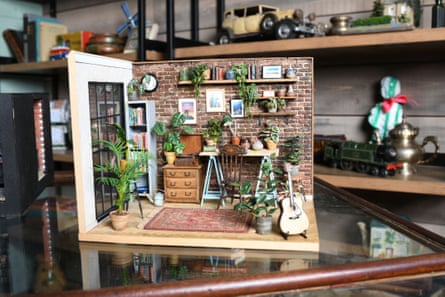
There are two ways of looking at The Marvellous Miniature Workshop, in which artists who specialise in making (marvellous) miniatures of things recreate buildings and places that hold great meaning for ordinary people, who have stories to tell presenter Sara Cox about them. One is to consider that it sounds … a bit weird? A bit of a reach? Are miniatures really a thing? Do therapists ever recommend recreating your happy place at 1:24 scale? And does this new BBC commission have the faintest whiff of desperation about it, as the powers that be scour the creative industries for something that is not baking, pottery, sewing, knitting or Kirstie Allsopp festooned with festive ribbons and pine cones?
The other is to look at the premise and shout: “Making models of rooms and buildings that look like the originals but teeny-weeny?! Everlastingly charming! Endlessly fascinating! This is all my Christmasses come at once! Count me in! Sign me up! Inject the titchiness into my veins!”
To those who look at it the first way – I get it. I do. To those who look at it the second way – especially all those who read Rumer Godden’s The Doll’s House or watched the 1984 stop-motion adaptation by Oliver Postgate and have known no greater happiness since (blotting paper wallpaper. A tie for Mr Plantagenet out of red silk ribbon) – I feel ya.
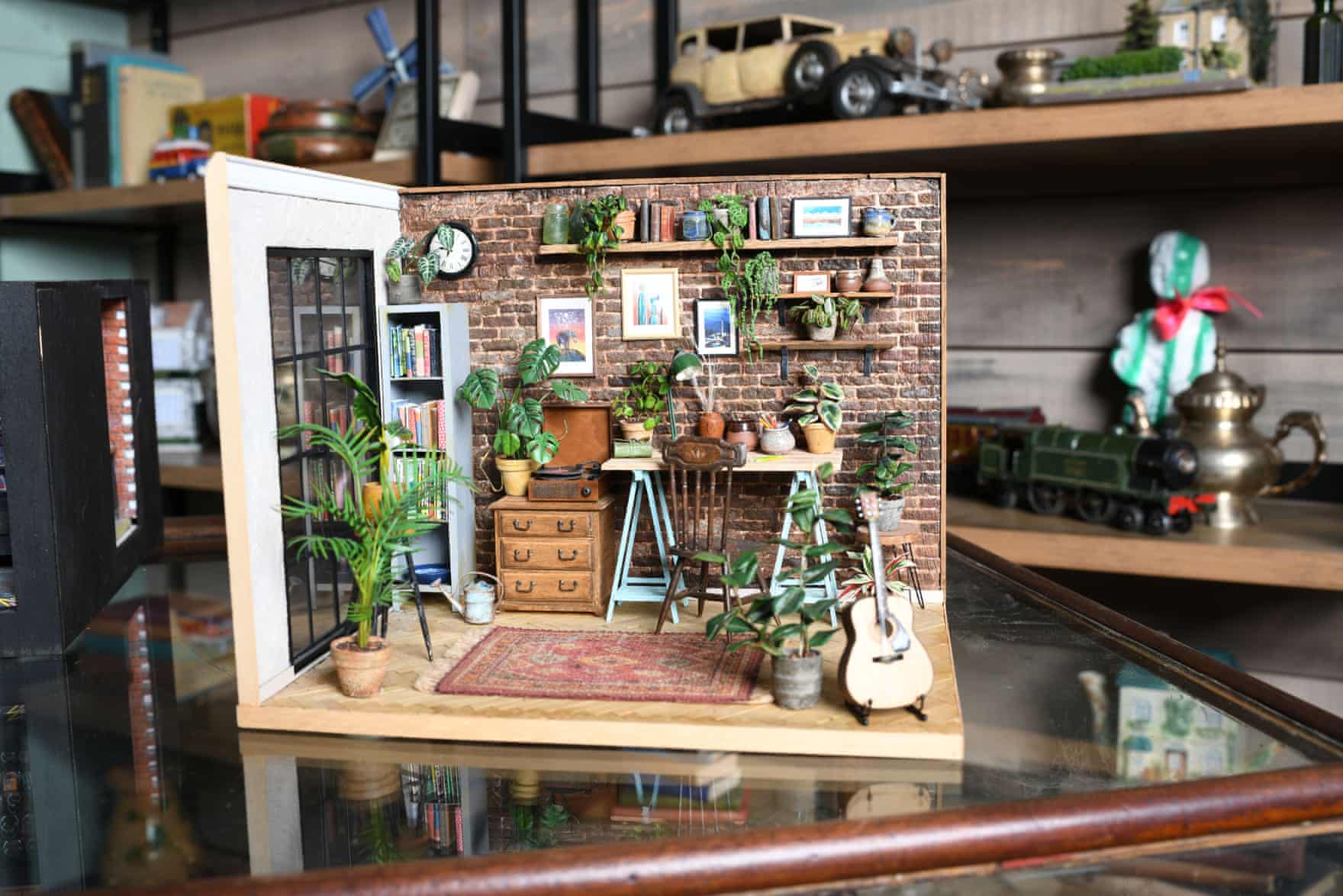
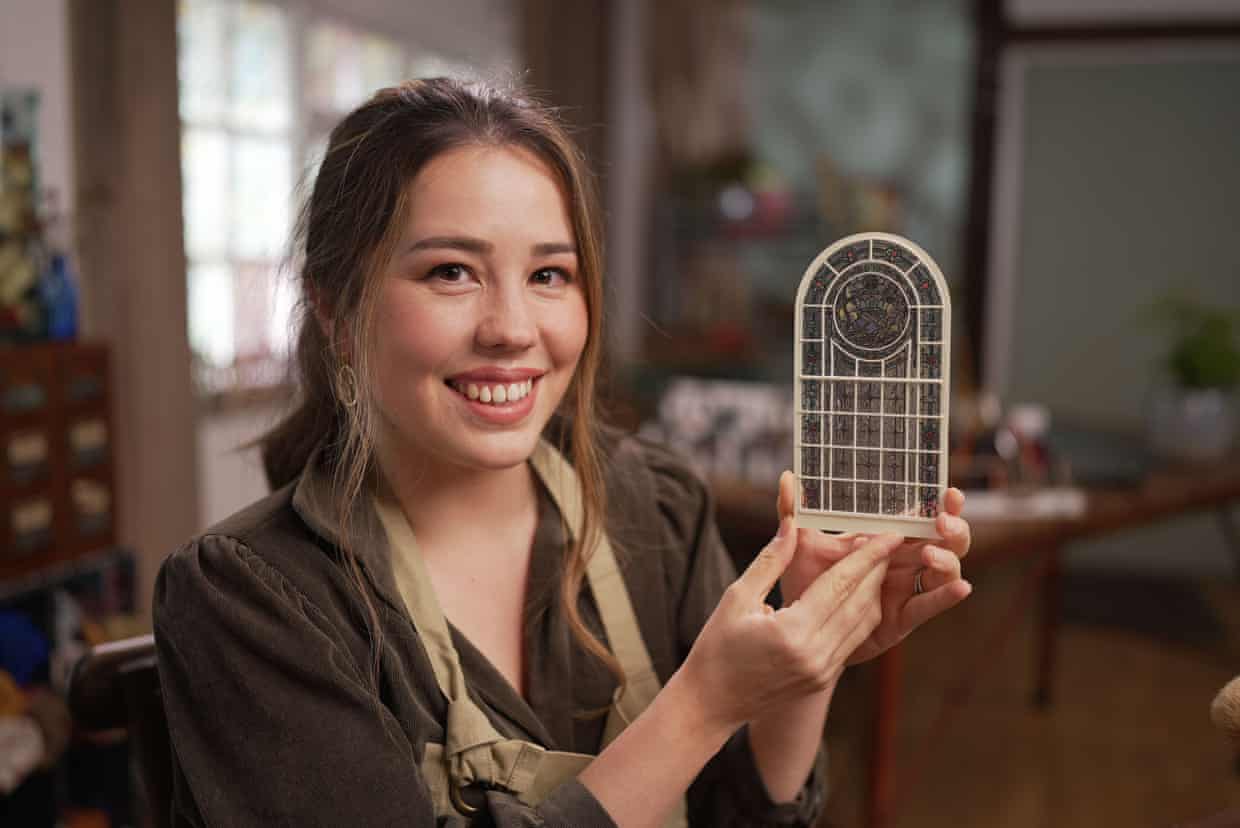
It is for all those of us in the second group that the workshop exists but we, the already converted, extend the hand of friendship to everyone. Just give the first episode a try. It’s only half an hour, and Hannah Lemon is going to recreate the reading room of Manchester’s Crumpsall library in the mid-1950s for retired social worker Leah, who met her future husband, Neil, there when they were schoolchildren. She was 14 and knew after 20 minutes of speaking to him that she would marry him. They were together for more than 60 years, until he died in 2022.
Crumpsall library lent its last book in 1974. It then became a community centre but has been unoccupied for the last 17 years and is now derelict. Photos of the library in better times are gathered, local historians consulted, Leah’s memories of the colours and furniture she and Neil knew are filleted and Hannah sets to work. The stained-glass window that illuminated the world of knowledge offered to the working-class readers for whom the library was built in 1911 is reborn via fragile polystyrene rods, tinted resins and Hannah’s skill at drawing Lancashire roses the size of seeds. Real wood veneer crisscrossed with a craft knife becomes Edwardian parquet flooring.
And then, of course, there are the books. Three thousand little blocks of wood, individually wrapped in specially printed bindings and glued on to bookcases or scattered on desks – alongside tiny rumpled newspapers – and piled by tiny chairs upholstered in period-specific fabric. Oh, you’re not crying yet? That’s OK. Here comes Hannah’s final touch: a minute replica of the school cap Neil had stuffed in his back pocket when he and Leah first spoke, left on one of the chairs as if he had just disappeared behind a stack for a moment. Let the weeping commence.
If you survive that, I assure you the episode in which Abi Trotman recreates the maths classroom remembered by then-new immigrant from Bangladesh Kareem as a safe haven from the violent racism that pursued him and his family on the streets of 1980s east London, and meets again the teacher – “Mr Carter!” – who turned it into a sanctuary, will get you.
Or the one in which Lee Robinson builds a replica of the Silverwood Colliery pit head for Reg, the fourth and last generation of his family to work in the mine – known as “a widow-maker” – but, Reg says, “I’d go back in a heartbeat.” He once helped to bring an injured friend up to the surface as he begged to see the sun again. “He died just as he got out.”
Lee laser-cuts winding wheels, builds maintenance ladders and constructs pulley systems that tower over miniature buildings, brickwork sooted by a wash of thinned black oil paint. He adds the pit banner, minutely fringed with gold thread with the motto that kept the miners going through the strike against Thatcher’s closures: “All for each and each for all.” “I’m really back home,” says Reg, gazing at it. “Where I belong.”
You can fit a lot of grace into a tiny model, a half-hour programme, a glimpse of a life.