More than one in four secondary school pupils say they are unmotivated in the classroom, a new Government survey has found.
A poll of 2,500 pupils found 30 per cent described themselves as not motivated – up from 25 per cent the year before and a low of 20 per cent in 2022.
The research, by the Department for Education (DfE), reveals a degree of apathy in the next generation at a time when ministers are struggling to fill skills shortages.
Levels of enthusiasm for school differ by gender, with 32 per cent of girls being unmotivated compared with just 28 per cent of boys.
Meanwhile, 35 per cent of pupils from low-income families did not have motivation – compared with 28 per cent of their more well-off peers.
Among those with special educational needs and disabilities (SEND), 32 per cent felt this way, compared with 29 per cent of other pupils.
And the research found pupils aged 11 to 14 were more enthusiastic than those aged 14 to 16 – who are taking their GCSEs.
The wide-ranging research also asked pupils about their feelings about teachers and school in general.
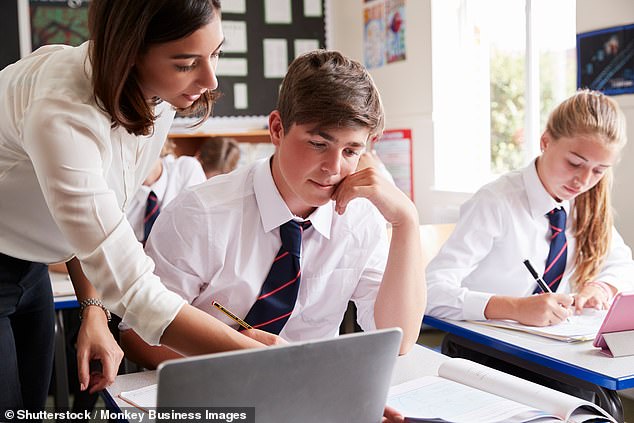
It found only 57 per cent of pupils said there is often or always an adult at school who ‘really cares about me’, though this has increased from 50 per cent in 2024.
Meanwhile the proportion saying they felt like they belong at school was 69 per cent, representing a significant increase from 57 per cent last year.
And 78 per cent said they felt safe in school at least most of the time, an increase from 72 per cent last year.
The report was published after the Government committed to expanding its data on belonging, safety and enjoyment of school.
In June, Keir Starmer met racing driver Sir Lewis Hamilton, who runs a foundation called Mission 44, to discuss making education more inclusive.
One member of Mission 44’s youth advisory board, Aaliyah, 24, who was excluded from school, said: ‘My favourite teacher left after my first year of secondary school, and after that I didn’t feel like anyone there really cared about me or how I was doing.
‘I didn’t have anyone to go to about the challenges I was facing at home, and in turn that affected my motivation to be in school and to learn.
‘It was demoralising, and when you don’t feel supported or that there’s anyone you can reach out to, it makes you feel like school isn’t a place where you belong.’
Findings from UCL researchers early this year suggested secondary school pupils in England have some of the lowest school engagement rates around the world.
Olivia Bailey, minister for early years education, said: ‘These findings show we are making real progress in creating school environments where every child feels valued and supported – and through our plan for change we are determined to go further.
‘Through our rollout of mental health support teams in schools, a renewed national curriculum and plans to drive up pupil engagement, we will break down barriers to opportunity for every child.’