‘Of course I didn’t lie,’ claimed Rachel Reeves on Sky News yesterday morning, though the Chancellor had to be pushed three times to say it.
But how can we be sure that itself is not a lie? After all, in the long, chaotic, confusing run-up to her second Budget last Wednesday, we were swamped with a veritable plethora of porky pies from her and the Treasury.
We know now, thanks to details revealed on Friday by the Office for Budget Responsibility, the Government’s official number-crunchers on tax and spend, that there was a yawning gulf between what Reeves knew to be true in private and what she was telling the rest of us in public.
At the weekend we learned that Keir Starmer also knew what his Chancellor knew – yet did nothing to stop her misleading the country with untruths, omissions and distortions about the state of the public finances.
If Reeves has lied to us – and that looks increasingly likely – then there can be no doubt the Prime Minister was complicit in the deception. Which explains why Starmer is today rallying to her defence. He knows his fate is tied to hers.
During the summer doldrums it began to eke out from official circles that events said to be beyond the Government’s control meant the nation’s finances were still in a bad way. The ground was being prepared for another big increase in taxes – something the Chancellor had vowed not to repeat after her first tax-raising Budget in October last year.
None of this, we were assured, was the Government’s fault. Brexit had apparently hit the economy worse than expected. The war in Ukraine and Donald Trump’s tariffs were a drag on the global economy. In particular, the OBR had downgraded its estimate of British productivity growth, which meant expected tax revenues had taken a huge hit. A new fiscal black hole had emerged – perhaps as big as £30billion – requiring another hefty rise in taxes to fill it, just as Reeves had raised taxes to fill the previous year’s black hole she claimed to have inherited from the Tories.
We now know none of this was true. On September 17 – over two months before the Budget – the OBR told her that its ‘productivity downgrade’ (which did indeed take its toll on tax revenues) had been largely offset by more buoyant revenues from rising wages and inflation. The black hole was only £2.5billion, which didn’t require huge tax rises to fill it. Despite this relatively good news, the Treasury drumbeat of gloom grew ever louder. On September 26, Reeves said the productivity downgrade was ‘challenging’ and ‘I’m not going to duck that challenge’ – a clear hint of tax rises to come. There was no mention of other revenues offsetting the downgrade.
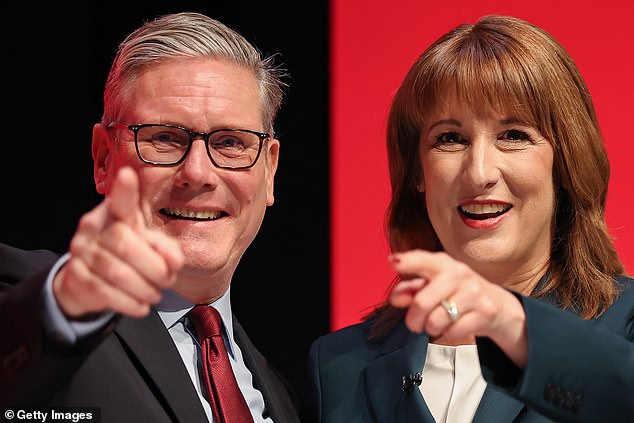
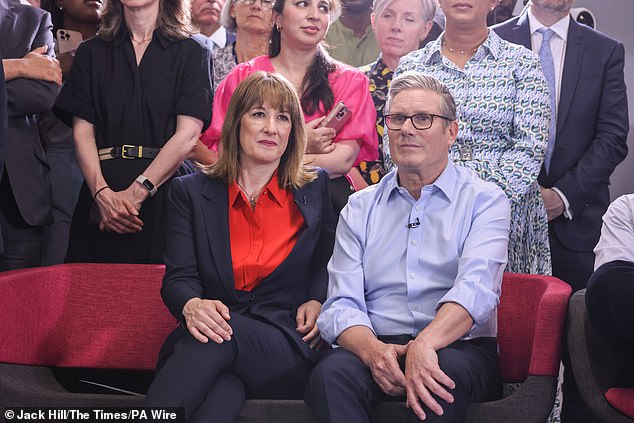
The more the news got better in private, the grimmer Reeves’ warnings in public. There was a bizarre disconnect between what the Chancellor knew to be true and what she was telling us. It amounted to downright dishonesty to justify jacking up taxes.
On October 20, the OBR reported to the Treasury that the fiscal position had further improved. The loss of revenue from lower productivity had been more than wiped out by other tax revenues being higher than expected. She was now ‘on course’ to meet her fiscal targets. Indeed, she even had a small surplus of £2.1billion. It made no difference to the Treasury’s public gloom.
On October 27 the Treasury leaked to the Financial Times, Reeves’ favourite vehicle for off-the-record briefings, that the productivity downgrade meant a ‘£20billion hit to public finances’. It is a measure of the dishonesty now gripping the pre-Budget process that the briefing made no mention of it all being offset by other tax revenues.
Four days later (October 31), in its final fiscal forecast before it factored in whatever the Government had in store come the Budget (the ‘pre-measures forecast’), the OBR told the Treasury that there was now a £4.2billion surplus.
Far from sharing or even hinting at this good news, Reeves doubled down with her dishonest doom and gloom.
On November 4, she commandeered the breakfast airwaves in a bizarre ‘Cheerios’ press conference from Downing Street to signal that all manner of bad stuff – Brexit, global events, that hit to productivity – meant she’d have to break Labour’s manifesto commitment and raise income tax.
She didn’t say so in so many words. But that was the intended implication of her remarks, it was how it was reported and the Treasury was happy with such reports. ‘I want people to understand… the circumstances we face,’ she whined. ‘I am being honest with people.’ In fact, she was being the opposite of honest. She was lying.
Still the lies continued. On November 10 she continued to roll the pitch for income tax increases to fill a black hole in the nation’s finances she knew didn’t exist. ‘It would be possible to stick with the manifesto commitments [not to raise the main taxes]’, she told BBC radio ‘but that would require things like deep cuts in capital spending.’ Another lie.
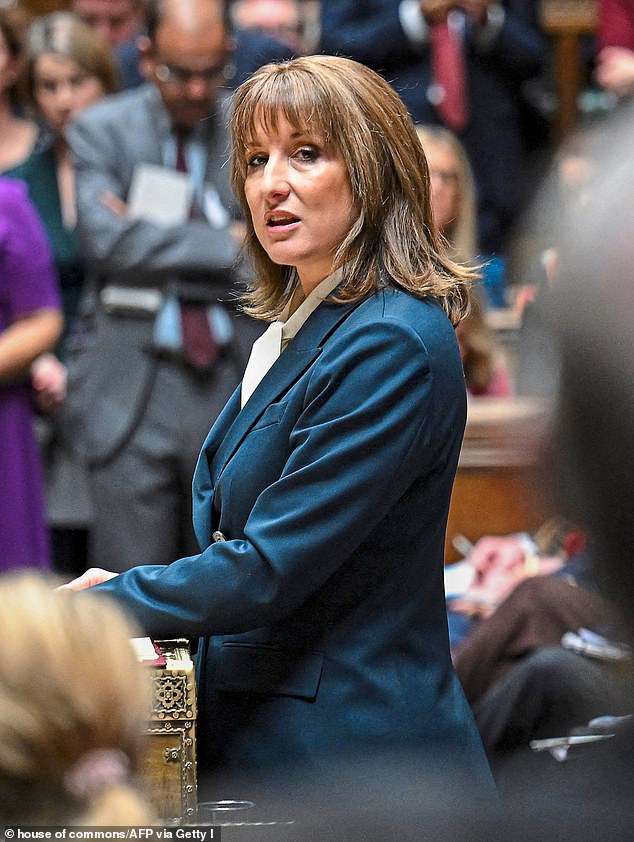
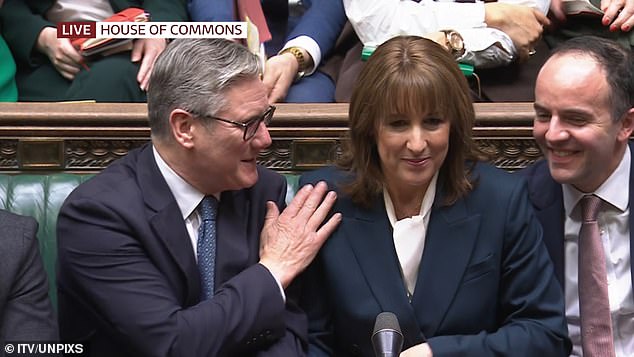
Then, lo and behold, on November 13, the Financial Times (of course) reported that there was now no need to raise income tax because the OBR’s latest forecasts were much improved. But even this dramatic course correction was a lie. The Government had known since mid-September there was no yawning black hole. It had known since the end of October there was actually a small £4billion surplus.
I warned on these pages at the time that the sudden ‘rosier-than-expected’ forecasts explanation was untrue. Starmer told Reeves to back off increasing income tax rates at the last minute because No 10’s efforts to rubbish Health Secretary Wes Streeting, seen as a leadership contender, were so cack-handed it actually set off something of a counter-coup against Starmer. He was now too weak to force through an income tax rate rise. It was pure power politics – and nothing to do with a new, non-existent OBR forecast.
At the weekend, No 10 rushed to Reeves’ defence. It conceded there had been a £4billion surplus rather than a black hole – but the OBR hadn’t factored in the cost of the winter fuel U-turn (£1.25billion), the aborted £5billion of welfare cuts and the £3billion cost of lifting the two-child benefit cap.
These measures would together have plunged the Chancellor back into fiscal deficit.
But that is precisely the point. Taxes are going up not because of Brexit, Ukraine, Trump, poor productivity or the tooth fairy running away with the magic money tree at the end of the Downing Street gardens. They are increasing because of conscious Labour policy choices to abandon welfare reform, eschew any cuts in public spending and tax working people more to raise welfare benefits – the express demands of Labour backbenchers on a Prime Minister and Chancellor too weak to resist them.
The Tories are calling on the Financial Conduct Authority to investigate Reeves’ behaviour in the run-up to the Budget. Market manipulation is a serious offence, especially if it involves moving markets on the basis of false information – and Reeves moved markets with a litany of lies, untruths and half-truths. But I suspect the regulators won’t want to tangle with a Chancellor.
Regardless, Reeves looks on her last legs. Forensic questions about her deceptions are batted away with a long, self-serving exegesis about child poverty, as she morphs from Iron Chancellor to Mother Teresa of the Treasury. Nobody is buying it and it won’t save her skin. The OBR, which ironically she professed to worship, has blown the lid off her serial gaslighting of the British people. She can’t survive the brutal exposé.
And when she goes, Starmer will not be far behind.