Hundreds of thousands of young children are getting hooked on social media before they learn to read, shocking new research has found.
More than a third (37 per cent) of children aged three to five now use at least one app or site – up from 29 per cent in 2023 – despite their links to anxiety, speech impediments, sleep disruption and bad behaviour.
Some tots spend so long slumped on sofas staring at screens that it even affects their physical development, leaving them unable to sit up straight.
Analysis by the Centre for Social Justice (CSJ), using data from Ofcom, suggests that 814,000 pre-school children In Britain are active on social platforms designed for teenagers and adults.
Such services typically have age restrictions set at 13, but these are easily bypassed.
Former schools minister Lord Nash called for stricter controls to keep young children off potentially harmful websites.
‘This research is deeply alarming,’ he said. ‘With hundreds of thousands of under-fives now on these platforms, children who haven’t yet learned to read being fed content and algorithms designed to hook adults should concern us all.
‘We need a major public health campaign so parents better understand the damage being done, and legislation that raises the age limit for social media to 16 while holding tech giants to account when they fail to keep children off their platforms.’
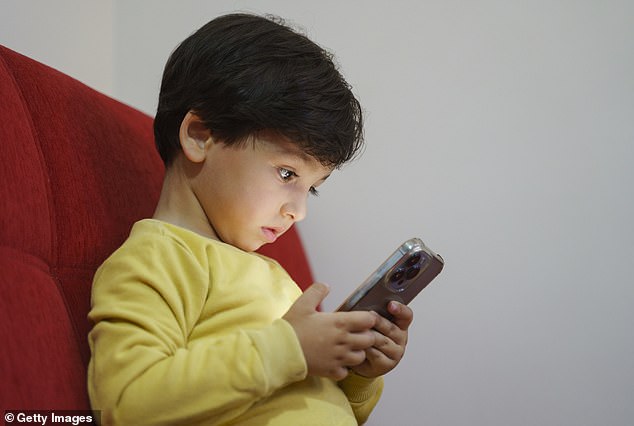

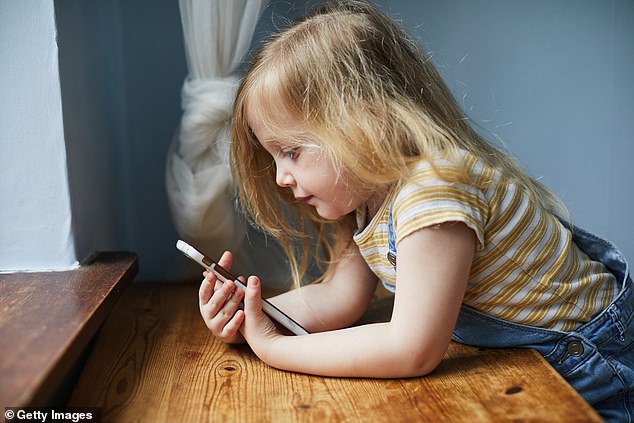
The data from Ofcom shows that almost one in five (19 per cent) children aged three to five use social media without their parents’ oversight, while 40 per cent of children under 13 have a social media profile despite restrictions.
One in four eight to nine-year-olds report interacting with strangers while gaming online.
Molly Kingsley, co-founder of campaign group Safe Screens, said: ‘This is yet another data point that shames our failure to take decisive action on ensuring that addictive social media is taken out of the hands of kids.
‘Banning phones from schools should have been done already, but the reality is, even that won’t help our very youngest children. We need an urgent discussion about the appropriate solution, which could be tougher age restrictions on social media.’
The report by the CSJ, Change the Prescription, highlighted the harm of exposure to social media at the stage when children’s speech, sleep, attention and emotional development are most vulnerable to disruption.
The think-tank is calling for a total ban on smartphones in schools, tougher enforcement of age limits and a public health campaign to highlight the harms of social media.
It warned of rising anxiety and identity-based distress linked to persistent stimulation from screens, with schools reporting declining attention and behaviour.
Worryingly, the potential harm is not limited to the psychological. Children who use screens for more than 60 minutes daily are ten times more likely to develop musculoskeletal disorders than those who do not, especially if they use devices while lying down.
One teacher told a survey by children’s charity Kindred Squared: ‘I’ve got two children [in my class] who physically cannot sit on the carpet. They don’t have core strength.
‘And when I went to visit one of the girls in July, she’d never been to a nursery, she’d been sat in a corner sofa on an iPad, so she hasn’t developed her core strength and it’s really affecting her whole development.’
A study in New Zealand involving 6,000 children aged two to eight showed just 90 minutes of daily screen time led to below-average performance in communication, writing and numeracy, with toddlers showing heightened behavioural issues and precursors to anxiety disorders.
In June, an amendment to the Children’s Wellbeing and Schools Bill was tabled by Lord Nash, proposing an outright ban on social media for under-16s. A similar one was introduced in Australia three months ago.
Schoolgirl Molly Russell, 14, of Harrow, Middlesex, killed herself in 2017 after being fed disturbing content about suicide and self-harm by addictive social media algorithms. At her inquest in 2022, coroner Andrew Walker urged the government to crack down on tech giants and introduce strict enforcement of age limits.
The Department for Education said policies banning phones had already been made in 99.8 per cent of primary schools and 90 per cent of secondary schools.
A spokesman said: ‘Phones have no place in our schools and leaders already have the power to ban phones.
‘We support headteachers to take the necessary steps to prevent disruption, backed by clear guidance, and have also brought in better protections for children from harmful content through the Online Safety Act.’