Monday marks the start of Crohn’s and Colitis Awareness Week, which aims to raise awareness of the everyday struggles faced by people living with the conditions
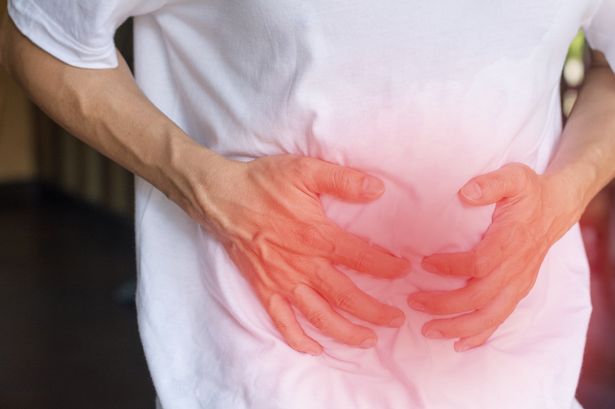
Problems with the gut and bowels can be debilitating for anyone, but thankfully can often be controlled through diet and medication. But for people with Inflammatory Bowel Diseases like Crohn’s Disease and Ulcerative Colitis, these are problems they have to live with every day.
Today, Monday, marks the start of Crohn’s and Colitis Awareness Week, which aims to raise awareness of the struggles faced by people living with the diseases. Both conditions cause painful sores and inflammation in the gut, according to charity Crohn’s and Colitis UK.
Common symptoms include cramping, diarrhoea, swollen joints, mouth ulcers, tiredness, and loss of weight and appetite. One social media influencer, who posts on TikTok as letstalkcrohns, outlined five things he wished he had known before he was diagnosed with Crohn’s Disease.
Saying knowing the five tips “would have saved me a lot of stress, confusion, and anxiety”, he began by saying: “Flare-ups aren’t just urgent bathroom visits or stomach pain. I didn’t expect to have joint pain, fatigue, fever, or brain fog. It’s a whole body thing and not just your gut.”
He continued: “People will assume that you don’t look sick, and this is so frustrating. Just because it’s invisible doesn’t make it any less real.”
For the next tip, he aimed to bust myths around diet. “It’s not just about food,” he said. “I used to think that just avoiding trigger foods would be enough, but stress, poor sleep, [and] over-exertion all play a massive part in your wellbeing.”
Continuing, he said: “Hospital visits can become a regular thing, and not every treatment might work for you the first time. It’s a process of trial and error, having patience, and finding a solution that works for you.”
On remission, when symptoms are less apparent, he said: “Remission doesn’t mean that you’re going to feel 100 per cent better. Hopefully you have good days, but you’re still going to have bad days, and because Crohn’s is a chronic condition, it still requires a certain level of management, but hopefully over time you’ll find something that works for you.”
Closing, he said: “I wish I knew a lot of this sooner, but honestly, how are you supposed to know?”
In the comments of the video the presenter added: “I actually want to add to this and say… it’s not all doom and gloom. Hopefully you’ll still have very normal days along the journey, some days you might not be ok, and that’s ok! I used to get so frustrated when I felt a little off but it’s all part of it! Just take on your shoulders and be aware of the highs n lows!”
TikTok users added their own experiences in the comments. One said: “Took me two years to find the right medication for Ulcerative Colitis disease. Been in a flare since last November and I’m only just starting to come out the other side.”
Another wrote: “I could not have worded this better myself, well said. So sick of seeing posts and the first thing they talk about is how much they go to the toilet. It’s so much worse and more than that.”
A different user wrote: “I also wish I knew how opinionated people can be about an illness they don’t have. People always tell me what diets to try like that’s how it works.”
And another said: “Place your mental health first. It’s a lot harder to do that than the physical. There will be a light at the end of the tunnel, even if it’s small victories at a time.”
Crohn’s and Colitis Awareness Week runs from Monday, December 1, to Sunday, December 7. Find out more at crohnsandcolitis.org.uk/
What are Crohn’s Disease and Ulcerative Colitis?
- Crohn’s Disease and Ulcerative Colitis are Inflammatory Bowel Diseases (IBD) that cause painful sores and inflammation in the gut.
- With Crohn’s Disease the inflammation can be anywhere in the gut, from the mouth to the bottom.
- In Ulcerative Colitis the inflammation and ulcers are only in the large bowel.
- There is another type called Microscopic Colitis, which also causes inflammation of the large bowel, but not ulcers. This is more common in women and usually starts after the age of 50.
- They can cause symptoms including cramping pain, frequent and urgent diarrhoea – sometimes with mucus – swollen joints, mouth ulcers, tiredness, lack of iron – or anaemia – loss of weight and appetite, and inflamed eyes. People with Crohn’s may also get cracks, or fissures, in the skin around their bottom.
- They are caused when the immune system starts attacking the body.
- In the UK around one in 123 people, more than 500,000 people, have an IBD.
- They can start at any age, but usually begin before the age of 30.
- They are lifelong conditions, but this does not mean people with them will always feel unwell.
- There is no cure, but they can be treated by medication, a liquid diet, and sometimes surgery.
- People with the conditions generally go through cycles of suffering flare ups, when they feel unwell, and period when the symptoms are less apparent, known as remission.
- Inflammatory Bowel Disease is not the same as Irritable Bowel Syndrome (IBS). IBS can cause tummy pain, bloating, diarrhoea, and constipation, but does not involve inflammation.