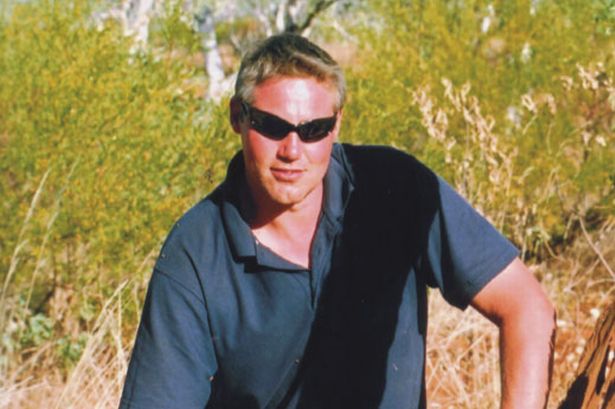
Ricky Megee ate snakes and drank urine to survive ten weeks of hell in the Australian Outback after an alleged kidnapping – but not everybody is buying his story.
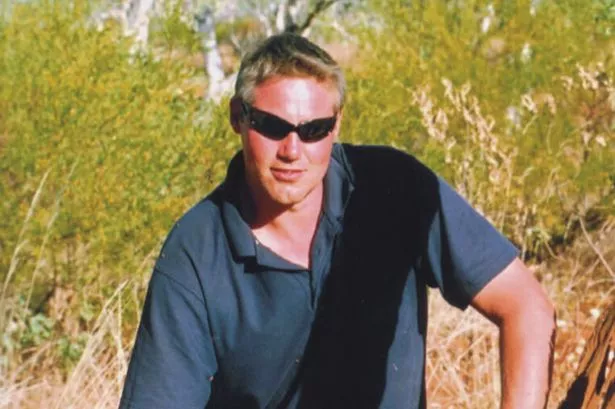
Ricky Megee was driving through the Australian Outback to start a new job, maybe even a new life, when he stopped to pick up a hitchhiker on the side of the road.
But the-35-year-old’s charitable act turned into a hellish ordeal when Mr Megee was drugged and left for dead in one of the world’s most inhospitable climates, a mystery that remains one of Australia’s weirdest and most controversial unsolved cases. In 2006, a group of young “jackaroos”, or cattle farmhands, in Australia’s Outback made a shocking discovery – a gaunt and emaciated man, wandering alone in the isolated desert. Mark Clifford, the head of the farm, later called the figure, “a walking skeleton”. This was Ricky Megee who, 10-weeks earlier, had disappeared off the face of the Earth while travelling from Brisbane, Queensland, to Port Hedland, Western Australia to start a new job.
Mr Megee had a difficult past. His father killed himself when he was still a child and he had been sent to jail a few times in the years since for street fighting and drug use. A habitual drifter, Megee hoped Port Hedland would be a fresh start. But to get there, he would first have to traverse 3000km of dangerous Outback. This included the Tanami Desert, described as one of the “most isolated places in Australia”. Undeterred, Mr Megee set out on the epic journey in his trusty 2001 Mitsubishi Challenger, a drive that would take him two to three days overall.
Along the way, though, something went wrong. Mr Megee himself has never been certain of the chain of events. At first, he said his car had broken down. Then he told reporters he had picked up an Aboriginal hitchhiker who spiked his drink, leaving him disoriented and alone.
Mr Megee changed his story again in his 2010 autobiography, which was co-written by writer and film director Greg McLean. McLean was best known for his 2005 slasher film Wolf Creek, which depicted a group of three backpackers being hunted through the Outback by serial killer Mick Taylor.
Now, Mr Megee claims he spotted three men on the roadside who said they had run out of petrol and offered to give one of them a lift. On the way, the hitchhiker either spiked Megee’s drink or stabbed him with a drug-filled syringe, leaving him “dazed and confused”. When Mr Megee came to, he found himself in his assailants’ camp. They were armed and took Mr Megee’s shoes but still fed him water and left his cash alone. Eventually, they disappeared, leaving Mr Megee in a makeshift grave and covered in black tarp. Mr Megee claims he woke up to four dingoes clawing at his body, hoping for an easy meal.
But regardless of which series of events was true, the outcome remained the same. Mr Megee was stranded hopelessly in the desert for 71 days with no idea of where he was. He walked for 10 days in an excruciating heat that regularly exceeded 40°C, fainting from heat exhaustion multiple times.
In his autobiography, he said: “It was hard, desolate country for a man all alone in bare feet. Nevertheless, I started to walk. And walk. The more I walked, I figured, the less distance I’d have to travel to get found. It was faulty logic, but it was the best I could come up with.”
To survive, Mr Megee ate snakes, ants, lizards, frogs and grasshoppers, scavenging in the evening when the heat was less extreme. He was also able to find small dams and waterholes where he could drink water and poach for leeches, which became another key source of food. He would eat them raw.
When water was unavailable, he drank his own urine or tried to gather up the morning dew. He mostly ate the small animals he hunted uncooked but would “fry” the frogs he caught by impaling them on wire and leaving them to sun-dry. He said he would let them get “a bit crispy” before eating them up.
He also built makeshift shelters to avoid the scorching heat in the day and the frigid cold at night. At first he used branches, then found a decrepit windmill and made a “humpy” (a form of shelter used by Aboriginal people) from an abandoned cattle trough. At one point, Mr Megee suffered an abscess in his tooth, a condition which could quickly have become fatal given his weak physical state. But refusing to let himself die, he dug the infected tooth from his mouth using his car keys.
When Mr Megee was eventually found, the 6ft2 man weighed just 7 stone, or 99lbs. Before he left, he had weighed 230lbs. He was quickly flown to the Royal Darwin Hospital in the Northern Territory, where medical staff described himself as emaciated but surprisingly well hydrated. Mr Megee’s car was never recovered, his captors never found. He would be discharged from hospital just six days later. But as news of Mr Megee’s story spread, questions started to emerge. The Sydney Herald speculated the tale had been fabricated and said there was “some doubts” as to its veracity, reporting Mr Megee was trying to sell his story to “a commercial television station”.
ABC Radio later stated he had given them his story free of charge, albeit only after unsuccessfully asking them to match an £11,000 offer he claimed to have gotten from another unnamed group. The police also reportedly “had doubts about the story because of Megee’s previous minor drug convictions” but dismissed suggestions of criminal wrongdoing on his part. The hospital staff were similarly uncertain, with the doctor who treated him saying it was “very difficult to either deny or validate” his story due to the unexpected speed of his recovery.
Yet Mr Megee stood by his story and credited his survival to his desire to see his friends and family again. He said: “People need to understand what I have been through. To have survived out there for so long and then be told I made it all up makes me sick.” He further added: “Before, I was a bit blasé about life, but now I cherish it everyday.”
Although his survival seems a miracle, Les Hiddins, an outback survival expert, said it isn’t that surprising. He claimed people can live off the outback’s wilderness for up to three years and noted that he had gone missing during the rainy season, making water much easier to come by. Mr Megee now lives in Dubai, where he manages a construction team. He hopes to do aid work in Africa one day, believing there is a higher cause behind his survival. He said: “I just think I didn’t die for a reason, and I’m able to help other people.”